Business analysis has evolved far beyond the traditional role of documenting requirements. Today, Business Analysts (BAs) are strategic partners who don't just document what is asked—they actively shape business outcomes.
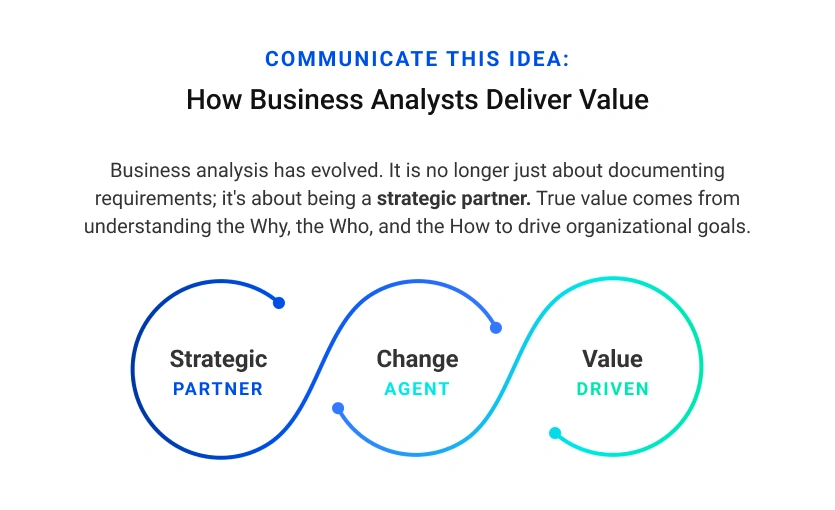
Business analysis has evolved far beyond the traditional role of documenting requirements. Today, Business Analysts (BAs) are strategic partners who don't just document what is asked—they actively shape business outcomes. Delivering true value means understanding not just the what, but the why, the who, and the how to support the organization’s broader goals.
1. Deep Domain Expertise: Seeing the Full Map
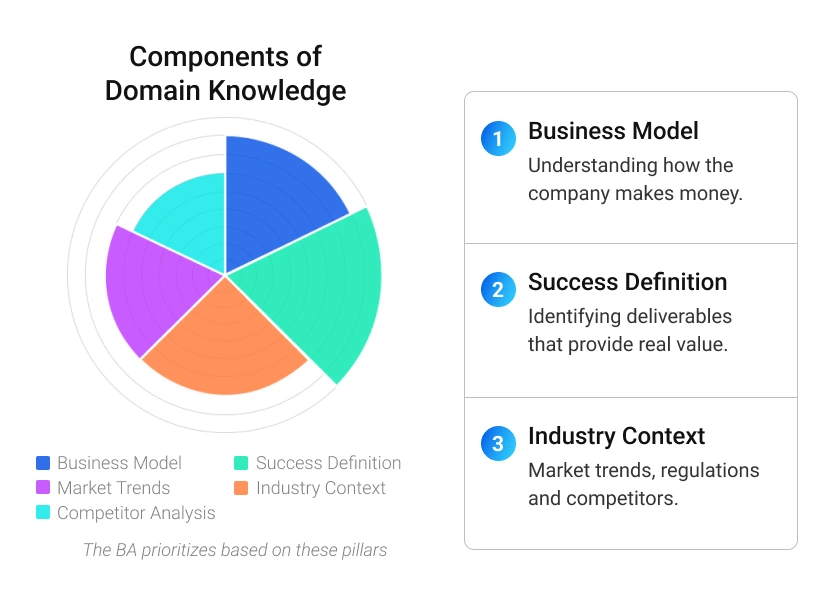
To be effective and deliver real value, a BA must move beyond functional specifications and acquire a deep understanding of the business domain. This isn't just about internal processes; it’s about the entire ecosystem.
Financial Literacy: Understanding how the company generates revenue and defines success.
Industry Context: Investigating market trends, regulatory constraints, and competitor moves.
Strategic Alignment: Challenging assumptions to ensure the solution treats the "disease" (the root cause) rather than just the "symptom."
User Experience (UX) Integration: Bridging the gap between business logic and design. By collaborating with designers, BAs ensure solutions are intuitive and efficient—not just "technically correct," but truly aligned with user expectations.
2. Bridging Logic and Experience: From MVP to SLC
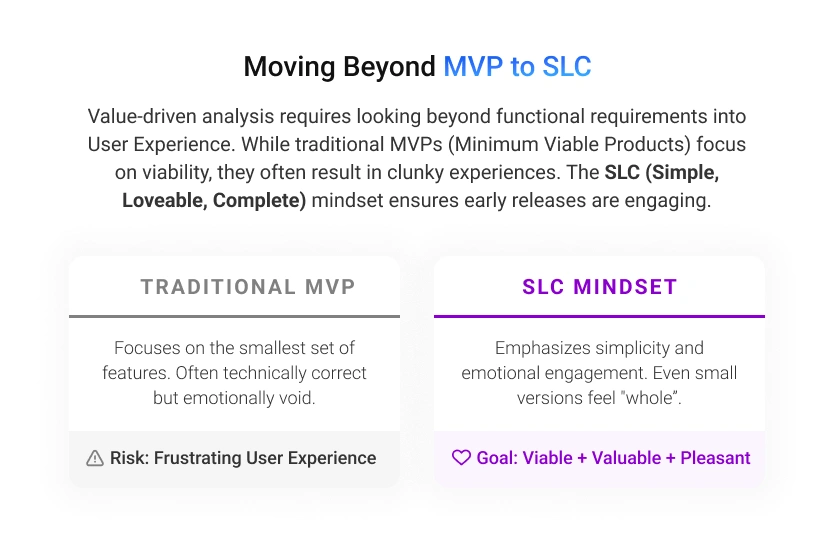
A key shift in modern analysis is moving from the MVP (Minimum Viable Product) to the SLC (Simple, Lovable, Complete) mindset.
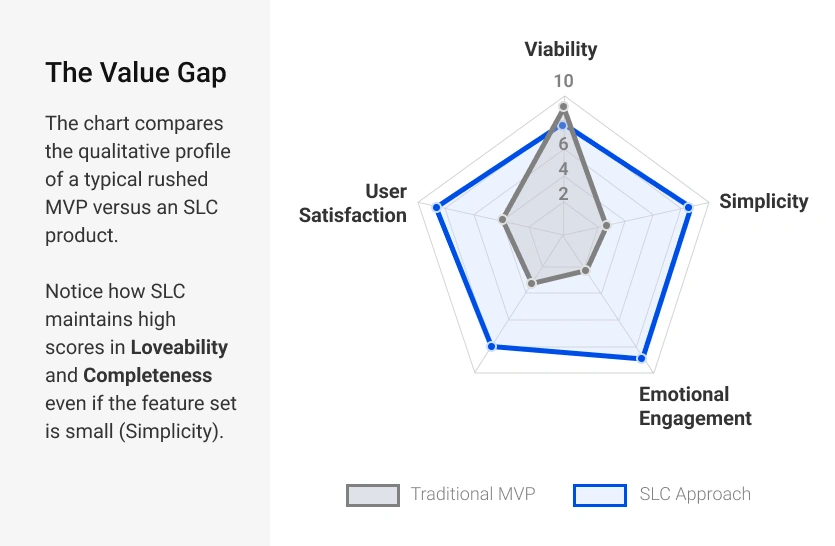
While MVPs often focus on delivering the smallest possible set of features, they can sometimes result in clunky or frustrating experiences that alienate early adopters. In contrast, an SLC mindset emphasizes the smallest set of delightful features, providing a sense of completeness and polish even in early versions.
By advocating for an SLC approach, BAs ensure that early releases are not just "technically correct," but emotionally engaging and genuinely valuable from day one.
3. The BA as an Active Problem Solver
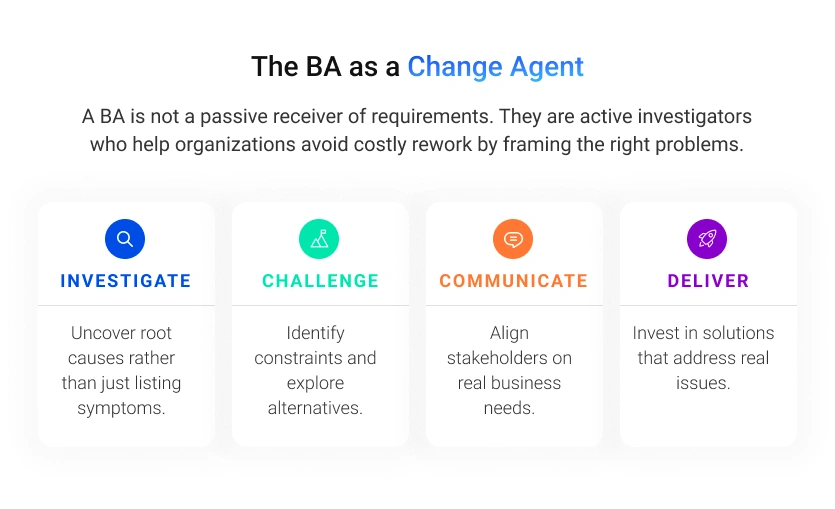
Another key dimension of value lies in problem solving. A BA is not merely a passive receiver of requirements, but an active investigator who helps uncover root causes, identify constraints, and explore alternatives.
By framing the right problems and asking the right questions, BAs can help organizations avoid costly rework and invest in solutions that address real issues rather than symptoms. Ultimately, a Business Analyst is a change agent. By combining business knowledge, user-centric thinking, problem-solving skills, and strong communication, BAs help organizations improve processes, enhance products, and adapt to change.
Going beyond requirements is not an extra task. It is the essence of how BAs deliver lasting value.
4. Leveraging AI: The Augmented Business Analyst
The modern BA is increasingly turning to Artificial Intelligence to accelerate impact. AI isn’t a replacement for the BA’s intuition—it’s a power-up.
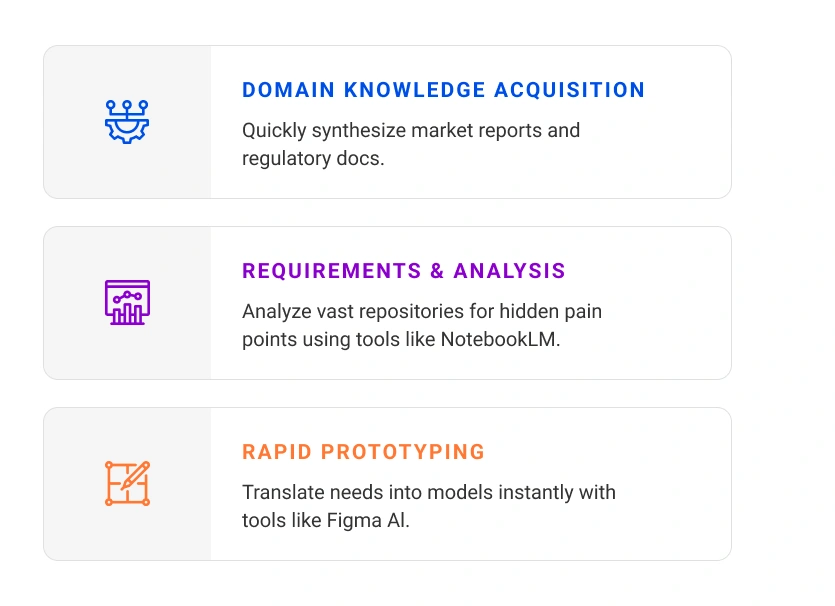
Accelerating Knowledge Acquisition - Generative AI can synthesize massive volumes of market reports, competitor data, and regulatory documents in seconds. This allows BAs to spend less time on manual data gathering and more time on strategic interpretation.
Enhancing Requirement Management and Problem-Solving: Tools like NotebookLM or Gemini Gems can scan vast repositories of user feedback and help-desk tickets to uncover hidden pain points or conflicting requirements before they become expensive problems.
Rapid Feedback: AI-powered prototyping tools (such as Figma AI) allow BAs to translate business needs into interactive models almost instantly. This tightens and accelerates the feedback loop, ensuring the final product is user-centric from day one.
Conclusion: The Essence of Lasting Value
Going beyond requirements isn't an "extra" task—it is the core of the profession. By combining domain expertise, user-centric thinking (SLC), and AI-augmented analysis, BAs ensure that IT organizations don't just build software—they build solutions that matter.
About the Author
Ana Franciosi
Project Manager, Product Owner and Scrum Master
Ana is a Project Manager/Scrum Master/Product Owner with over 10 years experience and a rich background working with IT eCommerce Projects. Ana has experience with B2B, Digital Marketing, User Experience, Segmentation and Mobility Solutions.
Your next digital success story is just beginning. If you want to turn complexity into confidence, start with a complimentary discovery session. Let’s see together how Object Edge can help you accelerate your eCommerce results and build long-lasting value.
Client-Centered Partnership: We are more than implementers. We advise, mentor, and collaborate at every step, helping your teams mature and succeed alongside new technology.
Focus on Your Outcomes: Every engagement is measured by your success—growth in revenue, customer loyalty, reduced operational headaches, and faster innovation.
Deep Specialization: With years of experience running global B2B and B2C commerce launches, our certified experts deliver exceptional, repeatable results.
Innovative by Nature: We continually learn and evolve, keeping your business ahead of trends whether in composable commerce, AI, automation, or whatever comes next.


_Graphic.webp)